
Effective CRM optimization strategies are the difference between a database that gathers dust and a machine that prints money.
In today’s hyper-competitive market, just having a Customer Relationship Management (CRM) system isn’t a strategy anymore; it’s merely a prerequisite. If you aren’t actively optimizing your workflows, speed, and data, you are likely part of the 50% of businesses whose CRM implementations fail to deliver real ROI.
Think of it like this:
You have bought a Ferrari (your CRM) and parked it in your driveway. It looks expensive, and it holds potential power. But if you never take it out of first gear, you are essentially driving a very expensive grocery-getter.
Here is a sobering statistic to kick off 2026: According to research by Gartner and Forrester, nearly 50% of CRM implementations fail to meet business objectives.
Why? Not because the software is bad, but because the right CRM optimization strategies are missing.
This guide goes beyond the basics.We are breaking down 7 expert-level tactics to stop revenue leakage, automate your busy work, and turn your CRM into a revenue engine.
1. Audit Before You Automate: The Core of CRM Optimization Strategies
The Problem: Most businesses rush into automation. They set up complex triggers and workflows on top of a broken sales process. As Bill Gates famously said, “Automation applied to an efficient operation will magnify the efficiency. Automation applied to an inefficient operation will magnify the inefficiency.”
The Strategy: The most fundamental of all CRM optimization strategies is the audit. You need to map your customer journey to identify “Friction Points.”
-
Where do leads typically drop off?
-
How long does a lead sit in the “New” stage before a human touches it?
-
Are your sales reps manually entering data that should be automatic?
The Fix: Conduct a Workflow Audit. Sit with your sales team and watch them work for an hour. If they are copy-pasting email addresses from LinkedIn into the CRM, your process is broken. Document the steps, remove the manual friction, and then build the automation.
2. Data Hygiene: Essential for Successful CRM Optimization Strategies
The Trust Factor: Bad data is the silent killer of sales teams. IBM estimates that bad data costs US businesses $3.1 trillion annually. If a sales rep opens a contact and sees a duplicate entry, a wrong phone number, or a missing last name, they lose trust in the system.
The Strategy: You must enforce “Data Governance.” Effective CRM optimization strategies always prioritize data integrity over volume.
The Fix:
-
Merge Duplicates: Schedule a monthly “Data Detox.” Use your CRM to identify and merge duplicate contacts so you have a single source of truth.
-
Standardize Input: Don’t let users type freely. Use dropdown menus for fields like “Lead Source” or “Industry” to keep data clean for reporting.
-
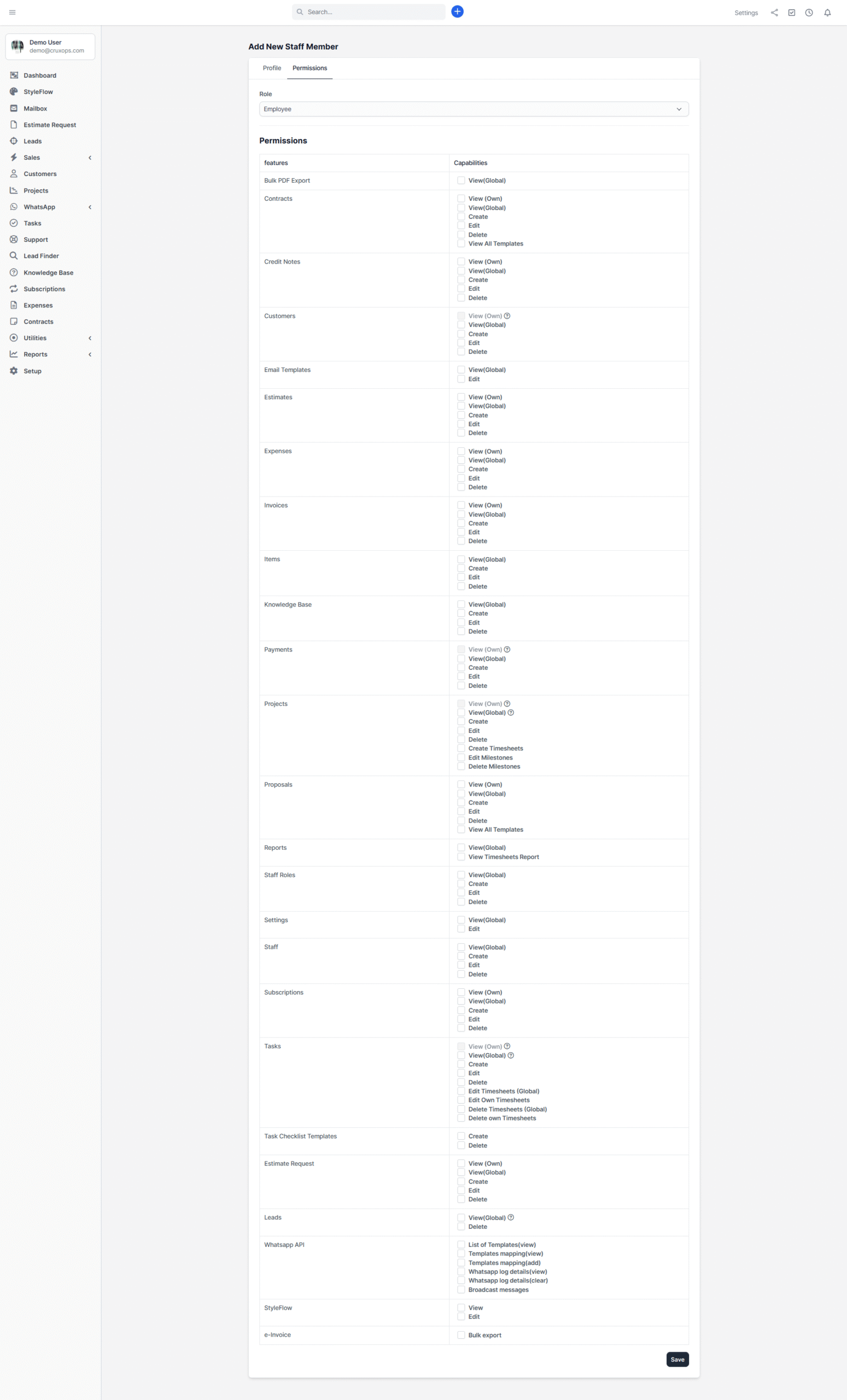
Force Critical Fields: In CruxOps, you can set permissions so a lead cannot be created unless a phone number or email is present. This prevents “half-baked” leads from clogging your pipeline.
Pro Tip: Use CruxOps’ User Roles management to limit who can delete data, ensuring that your valuable customer list stays secure.
3. Personalization is Profit (Beyond “First Name”)
The Desire: In 2026, personalization is table stakes. A study by Epsilon indicates that 80% of consumers are more likely to make a purchase when brands offer personalized experiences. If your idea of CRM optimization strategies is just inserting [First Name] into a generic email template, you are failing.
The Strategy: Use Behavioral Segmentation. Don’t just group people by who they are (Demographics); group them by what they do (Behavior).
-
Did they open your pricing page?
-
Did they download a specific whitepaper?
The Fix: Create “Smart Tags” in your CRM. If a lead clicks on your “SEO Services” link, tag them as “SEO Interested.” Then, send them case studies specifically about SEO success. When you speak directly to their pain, you don’t sell—you solve.
4. Integrate Your Tech Stack (Don’t Silo)
The Problem: The “Swivel Chair” effect. This is when a salesperson has to swivel between their email tab, their calendar tab, and their CRM tab. It wastes time and breaks focus.
The Strategy: Your CRM must be the “Central Nervous System” of your business. Advanced CRM optimization strategies focus on integration to ensure a single pane of glass for all operations.
The Fix:
-
Calendar Sync: Ensure every meeting booked is instantly reflected in the CRM timeline.
-
Proposal Integration: Don’t create proposals in Word and email them. Generate them inside the CRM so you know exactly when the client opens it.
-
Billing: When a deal is closed, the invoice should be generated automatically.
With CruxOps, you can manage the full lifecycle—from sending the Proposal to generating the final Invoice—without ever leaving the dashboard.
5. Automate the “Speed to Lead”
The Fact: Research by Harvard Business Review shows that companies that try to contact potential customers within an hour of receiving a query are nearly 7 times more likely to have a meaningful conversation with a key decision-maker.
The Strategy: You cannot rely on humans for speed. Humans sleep; humans eat lunch. Automation doesn’t. deploying CRM optimization strategies that focus on immediate response is critical.
The Fix: Set up an “Immediate Response Workflow.”
-
Minute 0: Lead fills out a web form.
-
Minute 1: CRM sends an automated “Personal” email: “Hey [Name], I saw your inquiry. I’m reviewing it now and will call you shortly.” (This buys you time).
-
Minute 2: CRM assigns a “Task” to the sales rep: “Call [Name] ASAP.”
6. Track Metrics That Validate Your CRM Optimization Strategies
The Reality Check: Drowning in data is as bad as having no data. A dashboard with 50 charts looks impressive but offers zero clarity. You need to focus on Actionable Metrics to know if your CRM optimization strategies are actually working.
The Strategy: Focus on the “Big 3” KPIs (Key Performance Indicators):
-
Lead Velocity: How many new qualified leads are entering the pipe this week vs. last week?
-
Conversion Rate: What percentage of Demos are turning into Paid Invoices?
-
Revenue per Lead: How much is a single lead actually worth to your business?
The Fix: Simplify your dashboard. In CruxOps, we prioritize clarity: A clear view of Total Leads, Deals in Progress, and Converted Sales. If a metric doesn’t help you make a decision, delete it.
7. Train Like You Mean It (The Human Element)
The Investment: Your CRM is only as smart as the people using it. You can build the world’s best spaceship, but if the pilot doesn’t know how to fly, it stays on the ground.
The Strategy: Make CRM training a continuous culture. CRM optimization strategies often fail simply because the team wasn’t trained on why the changes matter.
The Fix:
-
Weekly “Pipeline Reviews”: Don’t just ask “Did you sell?” Open the CRM during the meeting. Look at the data together.
-
Gamify It: Reward the rep with the “Cleanest Data” or the “Fastest Response Time.”
Final Thoughts: It’s Not About Software, It’s About Growth
Optimization isn’t a technical task; it’s a revenue task.
If your CRM feels like digital paperwork, you are doing it wrong. But if you implement these CRM optimization strategies—listen to your data, feed it clean inputs, and let it guide your day—it will transform your business from a chaotic hustle into a scalable machine.
Don’t let your leads slip away in 2026.
Ready to see what an optimized CRM looks like?
Stop wrestling with complex tools. Start using a platform built for growth.